
Trigg Property Investor Report
Why this suburb, why now, and what could go wrong: prices vs Perth, yields, vacancy, the supply pipeline, demographics, infrastructure and a clear strategy verdict for Trigg (6029).
Data compiled 2026. Every figure is attributed to a named source below.
The short version
Trigg is the purest scarcity play of Perth's premium beach suburbs: tiny, tightly held, almost entirely houses, and dominated by owner-occupiers who simply do not sell. Only around 30 homes change hands in a year, barely one in ten properties is rented, and there is virtually no apartment market. This is a surf-lifestyle suburb people buy to live in for decades, not to trade.
That makes it a buy-and-hold land-and-lifestyle asset, not an income one. House yields sit near 2.6%, so the case rests on long-run capital growth and the impossibility of making more Trigg beachfront. The growth driver is sitting just inland: the $800 million Karrinyup redevelopment is lifting amenity without putting apartment towers on the Trigg coast itself.
The full report below covers price trends versus Perth, rents and yields, the vacancy and supply picture, who lives here, the infrastructure driving demand, the real risks, and our plain-English verdict on who Trigg actually suits. Enter your email to read it in full.
Read the full Trigg report
Price trends vs Perth, yields, vacancy, the supply pipeline, demographics, infrastructure, risk and our strategy verdict, with every figure sourced. Enter your email to unlock it instantly.
1. Suburb snapshot
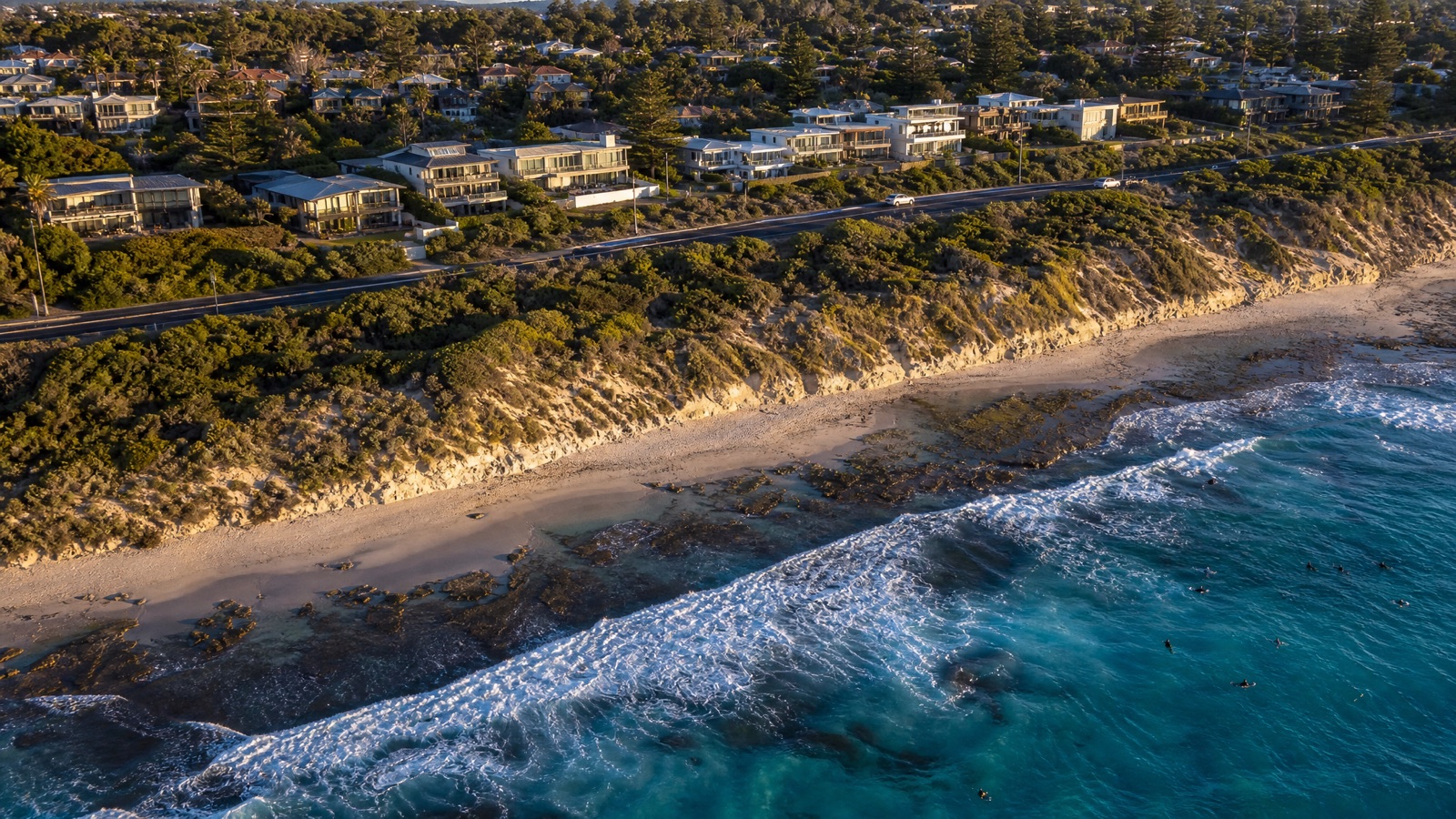
Trigg is a small coastal suburb about 14km north-west of the Perth CBD, known for its surf beach, Mettams Pool and the coastal bushland of the Trigg Bushland reserve. It is one of the most tightly held pockets in the northern beaches: a population of under 3,000, an overwhelmingly owner-occupied, family base, and almost no unit stock. For investors that translates into very low turnover, a thin rental pool and high entry prices, with the whole case resting on scarcity, lifestyle and long-run land value rather than on income.
2. Sales and price trends
The Trigg median house price sits somewhere between $2.3 million and $2.9 million depending on the source and window: REIWA reports about $2.3 million for the 12 months to August 2025, while property.com.au's market page shows a higher $2.875 million (REIWA; property.com.au). With only about 30 sales a year, a handful of large transactions swing the median, so treat it as a wide band rather than a precise number. There is effectively no published unit median, because Trigg is a house suburb.
On growth, REIWA shows Trigg houses up about 5.6% over the year (REIWA), well short of Perth's roughly 18% rise to about $1.09 million (Domain via ABC News). Like the western-suburbs prestige set, this top-end coastal market tends to lag the city on the way up and hold its ground on the way down.
Trigg lagged Perth's surge over the past year, the usual pattern for a tightly held top-end suburb.

"Trigg barely trades. About thirty houses sell in a year, so when the right one comes up near the beach, the competition is fierce and the median is almost meaningless on any given sale. I tell clients to forget the suburb average here and focus on the specific street and aspect, because a place above Mettams with an ocean view is a different asset to one on the eastern edge. You're buying a position you can hold for twenty years, not a number on a portal."
3. Rental market and yield
Houses rent for roughly $950 to $1,000 a week (REIWA; RealEstateInvestar), which against a median around $2.5 million is a gross yield of only about 2.6% (RealEstateInvestar). The rent does not come close to covering the cost of holding a house here, so a Trigg purchase only stacks up if capital growth does the heavy lifting over a long hold.
There is no meaningful unit market to offer a higher-yielding alternative, so unlike Swanbourne or Mosman Park, Trigg does not give income investors an apartment entry point. This is a house suburb, and the income trade-off is unavoidable: you accept a low yield in exchange for scarcity and lifestyle.
At about 2.6% gross, a Trigg house runs at a real annual holding cost. This is a growth and lifestyle asset, not an income one.
4. Supply and demand indicators
The defining feature of Trigg is how little turns over. Only around 30 houses sold in the past year (property.com.au), and just 10.9% of homes are rented (ABS 2021 Census), so the rental pool is tiny. A reliable suburb-level vacancy rate for Trigg is not separately published given how few rentals there are, but the combination of very low sales volume and a small rental pool is the classic signature of an owner-occupier stronghold where demand consistently outstrips available stock.
On supply, there is very little happening within Trigg itself: the coast is largely built out and protected by bushland reserve, and there is no apartment pipeline on the Trigg beachfront. The major nearby project is the $800 million Karrinyup shopping-centre redevelopment just inland, which includes a staged residential component (Blackburne's East Village delivers about 94 apartments in its first stage, with further apartments planned) (Blackburne; DMG Property). For Trigg, that is close to ideal: it adds retail, dining and amenity inland without putting competing apartment supply on the beachfront.
"Trigg gets the best of both worlds on supply. The beachfront can't be added to, because it's bushland reserve and established homes, so your scarcity is protected. Meanwhile the Karrinyup redevelopment is dropping a brand-new retail and dining precinct, and the apartments, a few minutes inland. Trigg owners get the amenity uplift without the towers next door. That's a rare combination, and it's a big part of why I think the long-run land story here is so durable."
5. Demographics and affordability
Trigg is high-income, family-dominated and overwhelmingly owner-occupied, the profile of a settled, hold-for-the-long-term suburb. The 2021 Census recorded a population of about 2,855, a median age of 43 (versus 38 for WA), and a median household income near $2,779 a week (ABS 2021 Census). About 78% of households are families, and just 10.9% rent, with nearly half of all homes (45.8%) owned outright. That very thin rental pool, in a suburb people rarely leave, is exactly why so few properties ever come to market.
6. Infrastructure and growth drivers
The demand investors are really buying into comes from Trigg's coast and its amenity, which are hard to replicate:
- CBD access. Trigg is roughly 14km and about a 25 to 30 minute drive from the Perth CBD via the freeway; there is no station in the suburb, with bus links to Stirling and Glendalough on the Joondalup line for rail commuters.
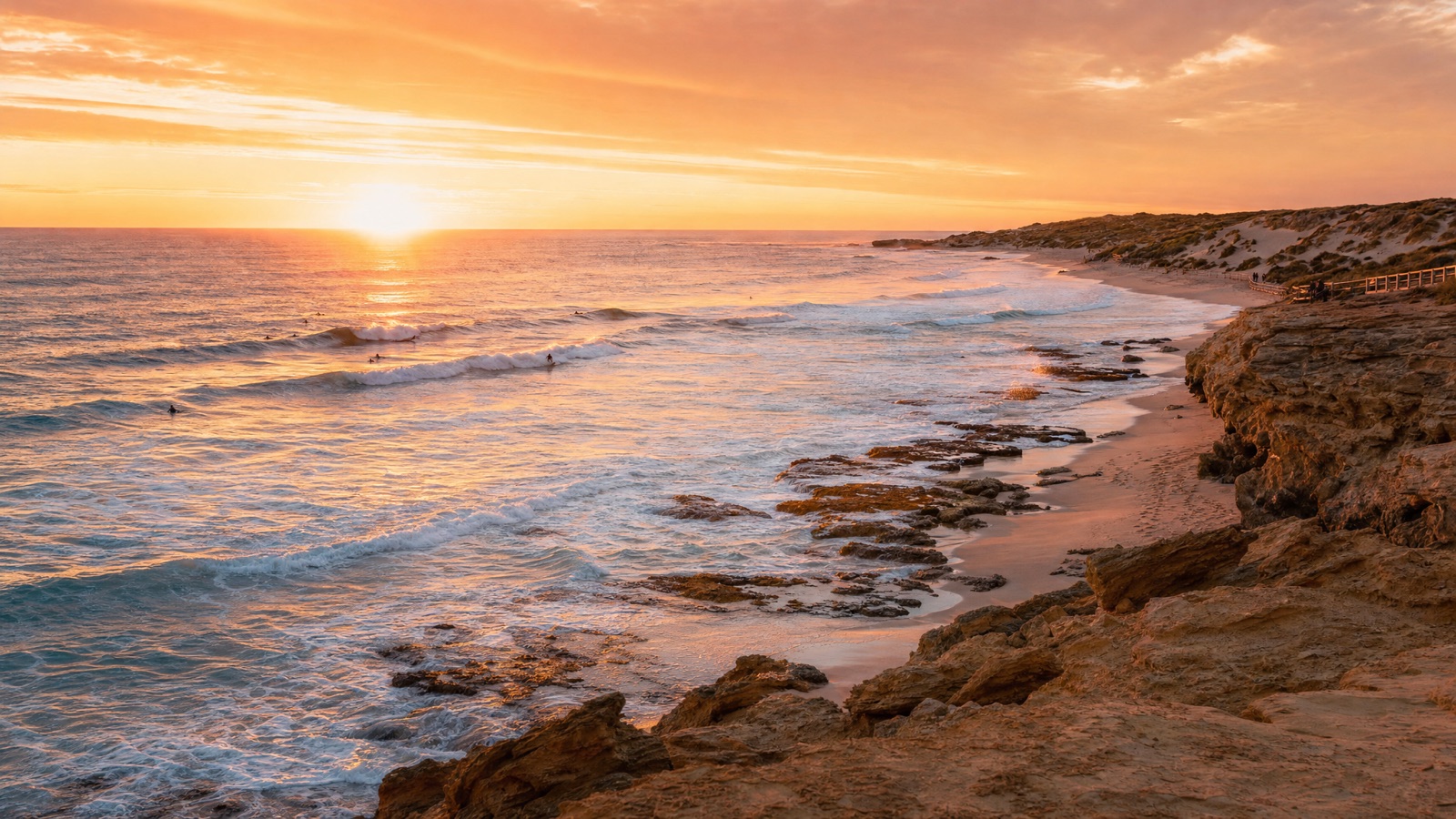
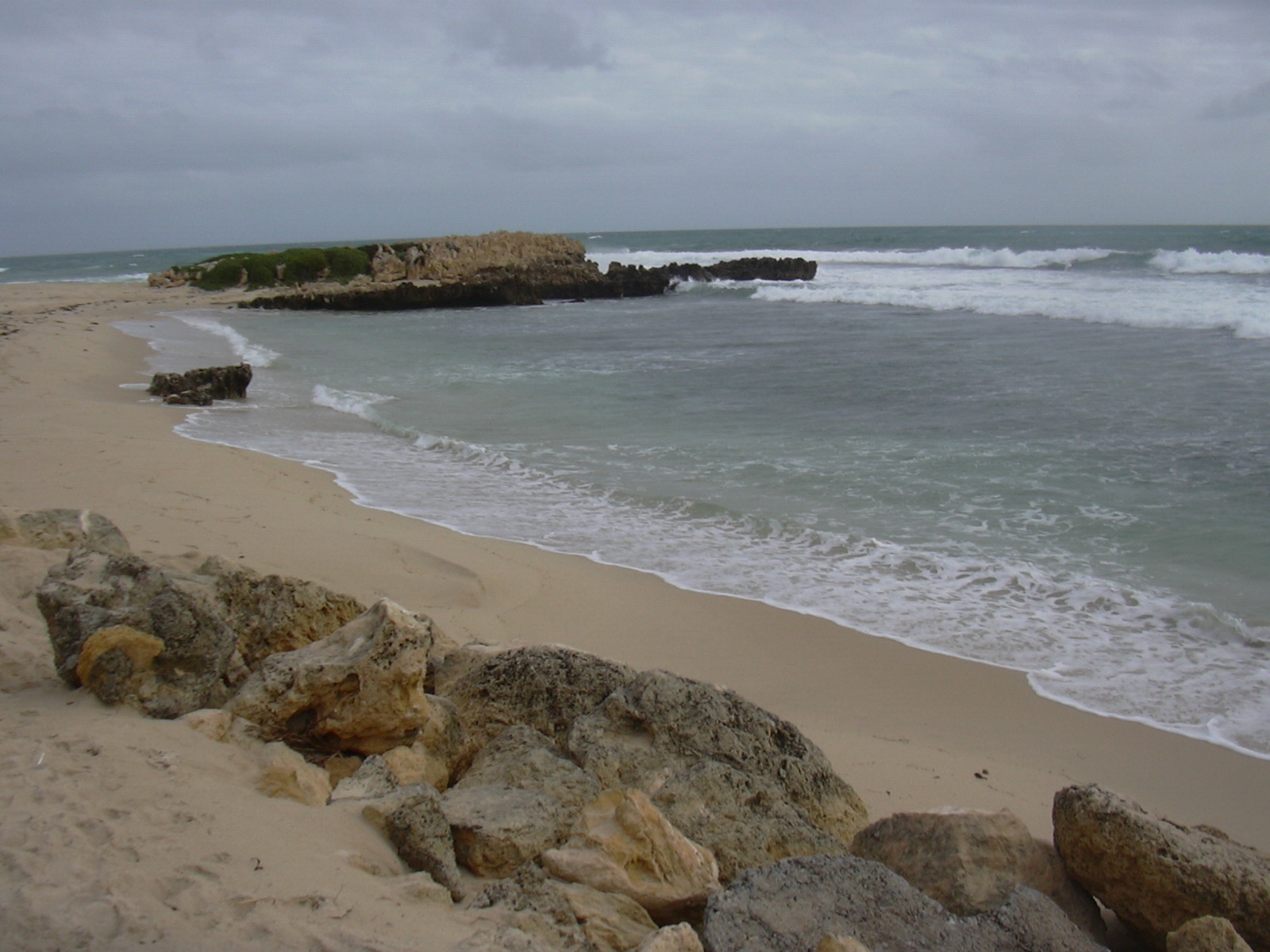
- Beach, surf and reserve. Trigg Beach, Mettams Pool and the protected Trigg Bushland reserve give the suburb a genuine surf-and-nature identity and a built-out, scarce coastline that cannot be added to.
- Schools. Deanmore Primary serves the local catchment, and the highly regarded St Mary's Anglican Girls' School sits just inland at Karrinyup, a meaningful driver of family demand.
- Karrinyup amenity. The $800 million Karrinyup redevelopment a few minutes inland is delivering a major new retail, dining and residential precinct, lifting everyday amenity for Trigg without adding beachfront supply (see section 4).
- Lifestyle scarcity. A small, established, sought-after coastal suburb with almost no churn is, in itself, the core growth driver: people buy in and stay.
7. Risk assessment and strategy fit
- Low yield, high holding cost. House yields near 2.6% mean real out-of-pocket holding costs every year; this only works with a long hold and capital growth.
- No income alternative. With effectively no unit market, there is no higher-yielding entry point; if you buy in Trigg, you accept the low house yield.
- Very thin liquidity. Around 30 sales a year makes both buying and selling slow and competitive, and a single asset is large and illiquid.
- Median is noisy. So few sales means the published median swings widely; valuing a specific property needs genuine local evidence, not portal averages.
- Lagged the cycle. Houses rose only about 6% over the past year against Perth's 18%, so near-term momentum is modest even as the long-run scarcity case holds.
Strategy fit. Trigg suits a high-equity, low-gearing buyer who wants a scarce, built-out coastal house for long-term capital growth and a genuine surf lifestyle, and who can hold through a low-yield, low-liquidity market. It does not suit a highly geared, cash-flow-dependent investor, an income-focused buyer, or anyone needing quick liquidity.
8. The investor verdict
Put the pieces together and Trigg is the textbook scarcity hold: a tiny, tightly held, owner-occupier surf suburb with a built-out coastline, almost no rental or apartment market, and major new amenity arriving just inland at Karrinyup, set against low yields, thin liquidity and modest recent growth. It will not ride Perth's cycle and it will not pay you much income; what it offers is a scarce coastal position that people buy to keep. Buy here for land, lifestyle and the long game, accept the low yield, and let comparable-sales evidence and negotiation, not the asking price, decide what you pay.
Sources
Thinking about buying in Trigg?
Numbers like these only get you so far. We can pull live comparable sales, pressure-test a specific property against this data, and negotiate on your behalf in Trigg.