
Swanbourne Property Investor Report
Why this suburb, why now, and what could go wrong: prices vs Perth, yields, vacancy, the supply pipeline, demographics, infrastructure and a clear strategy verdict for Swanbourne (6010).
Data compiled 2026. Every figure is attributed to a named source below.
The short version
Swanbourne is a leafy, tightly held western-suburbs pocket where scarcity is built into the geography. A large Commonwealth reserve and the old military land cover much of the suburb, so there is very little developable land and almost no new supply. Houses trade in the high $2 millions and sell within a tight, low-volume market, but they did not chase Perth's surge over the past year the way the mainstream market did.
What makes Swanbourne unusual for a prestige suburb is its tenant base. It is younger than its neighbours, with a quarter of homes rented, thanks to proximity to UWA, Scotch College and the beach. That is why the real investor opportunity here is the unit, not the house: apartments yield around 4.4% gross, well above the roughly 3% on houses, off a far lower entry price.
The full report below covers price trends versus Perth, rents and yields, the vacancy and supply picture, who lives here, the infrastructure driving demand, the real risks, and our plain-English verdict on who Swanbourne actually suits. Enter your email to read it in full.
Read the full Swanbourne report
Price trends vs Perth, yields, vacancy, the supply pipeline, demographics, infrastructure, risk and our strategy verdict, with every figure sourced. Enter your email to unlock it instantly.
1. Suburb snapshot
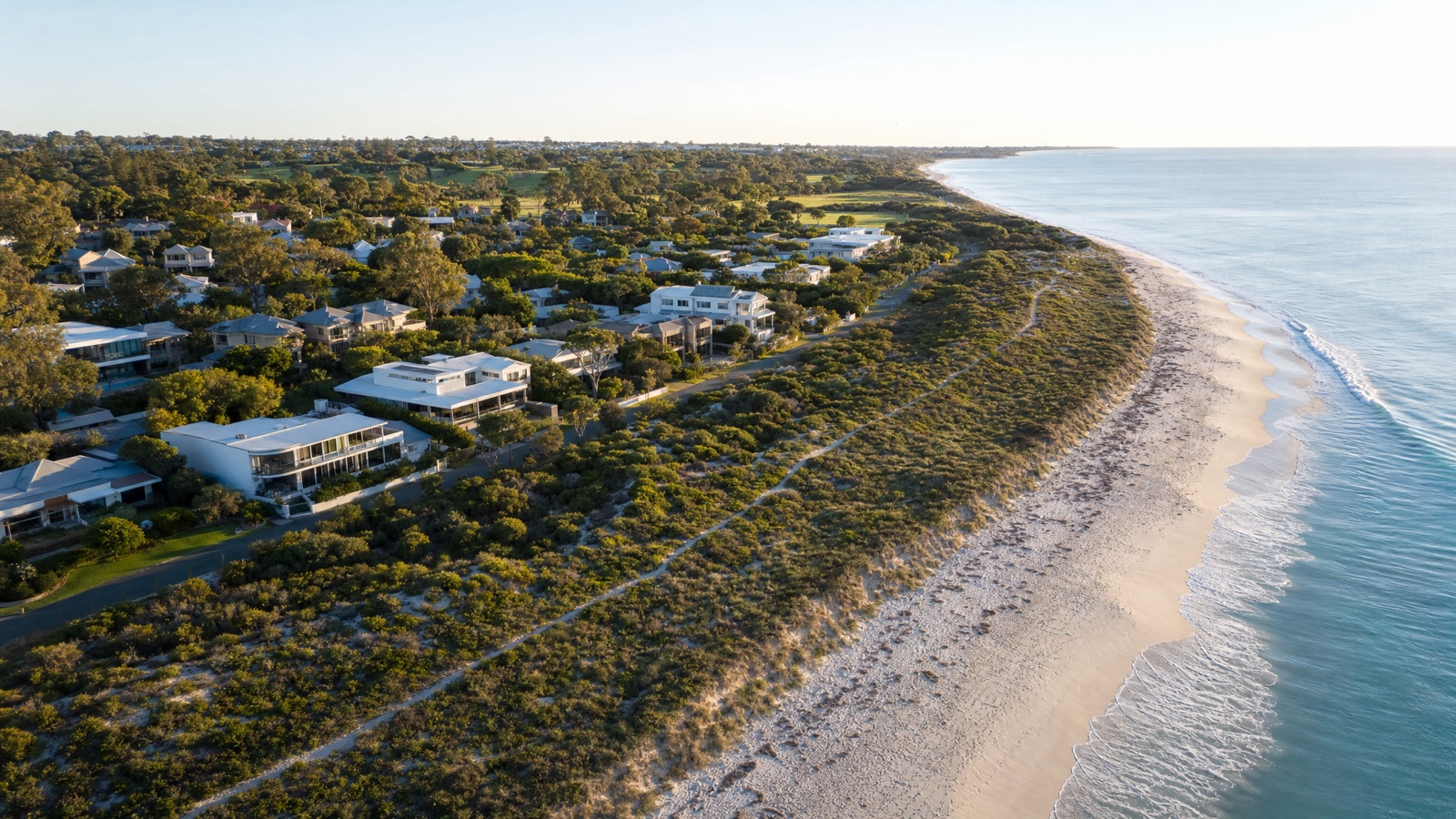
Swanbourne sits about 10km west of the Perth CBD on the Fremantle rail line, between Claremont and the Indian Ocean. It is one of the western suburbs' most tightly held pockets, with a large slice of its land locked up as Commonwealth reserve and former defence land, leaving only a modest residential core. For investors the defining features are scarcity of supply, a high-income but younger-than-average population, and an unusually deep rental pool for a prestige suburb. The thesis here is lifestyle scarcity on the house side and genuine income on the unit side, anchored by UWA, leading schools and the beach.
2. Sales and price trends
The Swanbourne median house price sits around $2.68 million (property.com.au), with REIWA showing a near-identical $2.69 million for the 12 months to August 2025 (REIWA). Units trade much lower, around $850,000 on property.com.au figures, or closer to $1.0 million on realestate.com.au's 12-month median (realestate.com.au).
The contrast with the wider city is the point. Over the past year Perth's median house price rose roughly 18% to about $1.09 million (Domain via ABC News). Swanbourne did not join that run: house values have been broadly flat, and units actually slipped about 2.3% over the year (property.com.au). Prestige, low-volume markets like this typically lag the city on the way up and hold their ground on the way down, because high-end buyers are far less rate-sensitive than the mainstream.

"Swanbourne is the western suburb people forget about, and that is part of the appeal. It does not have a big retail strip pulling attention, so it stays quiet, green and tightly held. The mistake I see is benchmarking it against Perth's growth headline. The houses here move on their own slow cycle. If you want Swanbourne to actually generate a return in the next few years rather than just sit there looking pretty, the unit market near the station and UWA is where the numbers work."
3. Rental market and yield
Houses rent for around $1,500 a week at a gross yield near 3.0% (property.com.au), with RealEstateInvestar's house benchmark lower again at about 2.2% (RealEstateInvestar). Either way, a house here does not pay for itself; the return has to come from capital growth over a long hold.
Units are the stronger income story: about $890 a week at a gross yield near 4.4% (property.com.au), roughly half again the house yield off a far lower entry price. For an investor focused on returns rather than trophy assets, that gap is the single most important number in this report, and it is reinforced by an unusually deep tenant pool for a prestige suburb.
Units yield meaningfully more off a far lower entry price, the key number for income-focused investors in Swanbourne.
4. Supply and demand indicators
On the demand side the rental market is extremely tight. Swanbourne's vacancy rate sits near 0.6% (RealEstateInvestar), well below the 2.5% to 3.5% range generally considered a balanced Perth rental market. Stock turns over slowly: roughly 52 to 58 houses sell in a year, with time on market ranging from about 21 days for smaller homes to 50-plus days for larger ones (Your Investment Property; Domain).
The supply side is the quiet strength of this suburb. Roughly a third of Swanbourne's land area is Commonwealth reserve and former defence land, which simply cannot be subdivided or built out, and there is no major apartment project approved within the suburb itself. The broader western suburbs are under state pressure to add infill around train stations, and the nearby Claremont and Curtin Avenue corridor is where most of that density is landing (western suburbs councils), which keeps new competing stock just outside Swanbourne rather than inside it. For an investor, constrained supply is the friend of long-run values.
"The reserve and the old army land are the secret to Swanbourne. You physically can't add much housing here, so the suburb can't be diluted the way a station-precinct suburb can. When clients worry about oversupply in the western suburbs, I point them here: the density is going into Claremont and along Curtin Avenue, not into Swanbourne. If you can buy a unit walking distance to the station, you get the income of a denser suburb with the scarcity of a locked-up one."
5. Demographics and affordability
Swanbourne is high-income and family-oriented, but younger and more rented than its prestige neighbours, which is exactly what gives it an income market. The 2021 Census recorded a population of about 4,592, up sharply on 2016, a median age of 38 (the same as WA, and well below Cottesloe or City Beach), and a median household income near $3,418 a week (ABS 2021 Census). About 80% of households are families, but a notable 25.2% rent, far higher than the single-digit rental shares in City Beach or Trigg. That deeper rental pool, in a supply-starved suburb, is what underpins the unit case.
6. Infrastructure and growth drivers
The demand investors are really buying into comes from Swanbourne's access and amenity, which are hard to replicate:
- Rail and CBD access. Swanbourne is on the Fremantle line, with Swanbourne and Grant Street stations putting the suburb roughly 18 to 22 minutes from Perth Station over about 10km; the drive is similar (Rome2Rio; Transperth).
- Schools. Swanbourne Primary serves the local catchment, and the suburb sits beside Scotch College and within reach of the wider western-suburbs private schools (MLC, Christ Church, PLC), a major driver of family demand.
- UWA and the health precinct. The University of Western Australia and the QEII medical precinct in Nedlands are a short trip south, supplying a deep pool of student, academic, medical and professional tenants, the engine of the unit market.
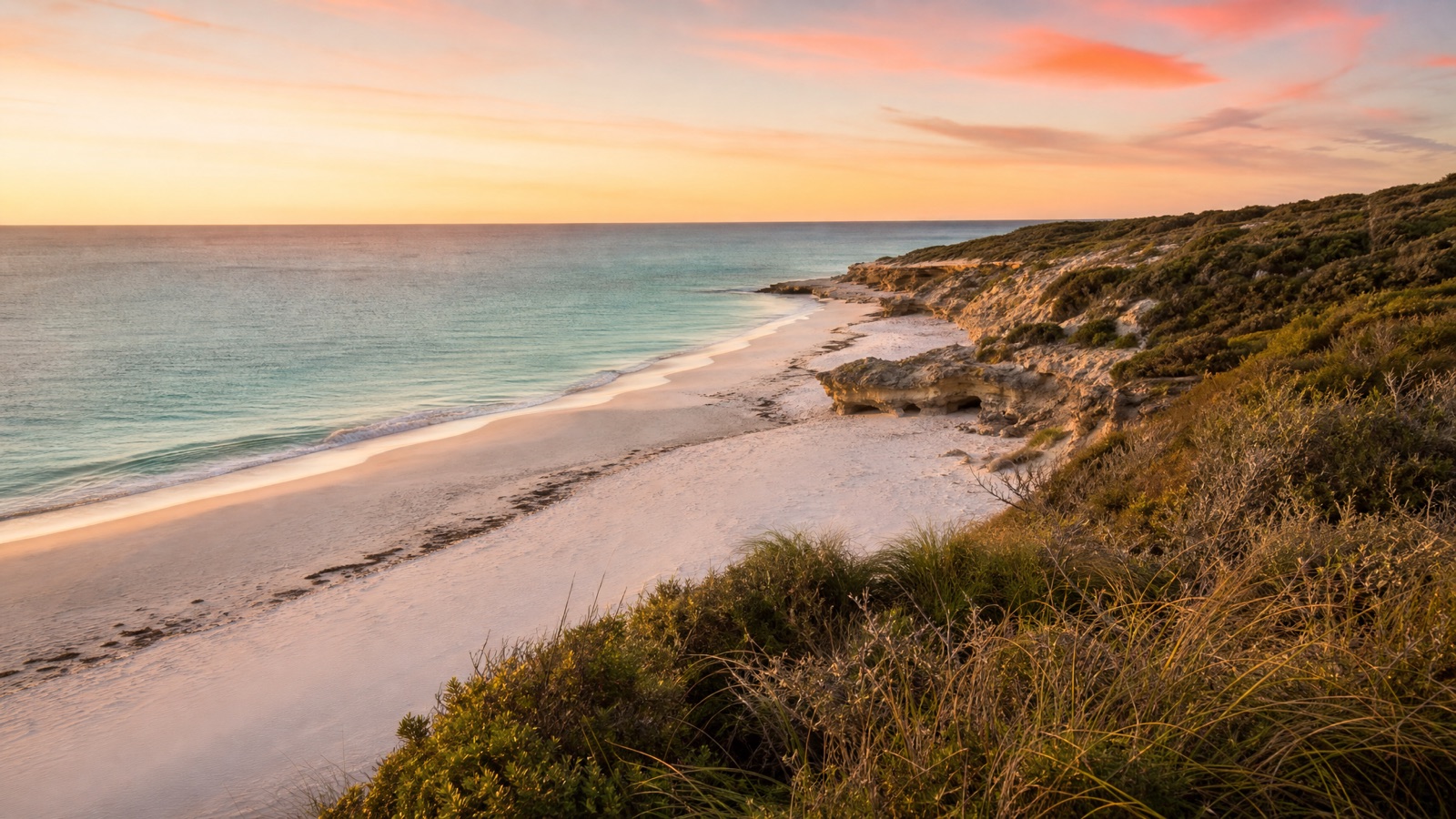
- Beach and parkland. Swanbourne has its own quiet surf beach plus Allen Park and the bushland reserve, giving it a green, low-density feel the denser station suburbs cannot match.
- Constrained supply. Commonwealth reserve and former defence land cap how much can ever be built here, supporting long-run scarcity (see section 4).
7. Risk assessment and strategy fit
- Low house yield, high holding cost. House yields around 3% or below mean real out-of-pocket costs each year; a house here works only on a long hold with capital growth.
- Flat-to-soft recent prices. Houses sat out Perth's surge and units slipped about 2%, so this is a hold-for-the-cycle suburb, not a momentum trade.
- Thin, lumpy market. With only 50-odd house sales a year and a small unit pool, individual sales swing the medians and comparables are scarce; valuing a specific property needs real local evidence.
- Tenant-mix sensitivity. The unit market leans on UWA and the health precinct, so demand is tied to enrolments and hospital staffing rather than the broader rental market.
- Liquidity. High price points and low volumes make exit slower and more lending-policy sensitive than mainstream Perth.
Strategy fit. Swanbourne suits a high-equity buyer who wants a leafy, supply-protected house for the long term, or a yield-tilted investor buying a well-located unit near the station and UWA for income plus scarcity. It does not suit a highly geared, cash-flow-dependent investor relying on a house, or anyone needing quick liquidity.
8. The investor verdict
Put the pieces together and Swanbourne is a supply-protected hold with a rare income angle: structural demand (beach, schools, UWA, the health precinct), very tight vacancy and land that physically cannot be built out, set against low house yields and flat recent prices. The houses are a slow, scarce, lifestyle hold; the units are where the suburb actually works as an investment, carrying yields well above the house market off a much lower entry price. Lean to units if income matters, and let comparable-sales evidence and negotiation, not the asking price, decide what you pay.
Sources
- REIWA, Swanbourne suburb profile
- property.com.au, Swanbourne 6010
- realestate.com.au / PropTrack, Swanbourne 6010
- Your Investment Property, Swanbourne 6010
- RealEstateInvestar, Swanbourne supply & demand
- Domain, Swanbourne days on market
- Domain via ABC News, Perth median house price
- ABS 2021 Census, Swanbourne
- Western suburbs councils, infill around train stations
Thinking about buying in Swanbourne?
Numbers like these only get you so far. We can pull live comparable sales, pressure-test a specific property against this data, and negotiate on your behalf in Swanbourne.