
Fremantle Property Investor Report
Why this suburb, why now, and what could go wrong: prices vs Perth, yields, the civic renewal pipeline, demographics, infrastructure and a clear strategy verdict for Fremantle (6160).
Data compiled 2026. Every figure is attributed to a named source below.
The short version
Fremantle is not really a suburb, it is Perth's second city: a working port, a university, heritage streets the state cannot build more of, and a tourism economy that fills the cafes every weekend. Houses trade in the $1.4 to $1.6 million range depending on whose data you read, and grew about 17% in the past year, right on the citywide pace.
Units are where the investor maths gets interesting: around $663,000 at a 4.6% gross yield, with 200 sales a year giving real liquidity. And unlike any other suburb in this series, Fremantle has more than a billion dollars of civic renewal in motion: Kings Square, the station precinct and the Victoria Quay waterfront. That is amenity upside your tenants notice.
The full report below covers price trends versus Perth, rents and yields, the vacancy and supply picture, who lives here, the infrastructure driving demand, the real risks, and our plain-English verdict on who Fremantle actually suits. Enter your email to read it in full.
Read the full Fremantle report
Price trends vs Perth, yields, vacancy, the supply pipeline, demographics, infrastructure, risk and our strategy verdict, with every figure sourced. Enter your email to unlock it instantly.
1. Suburb snapshot
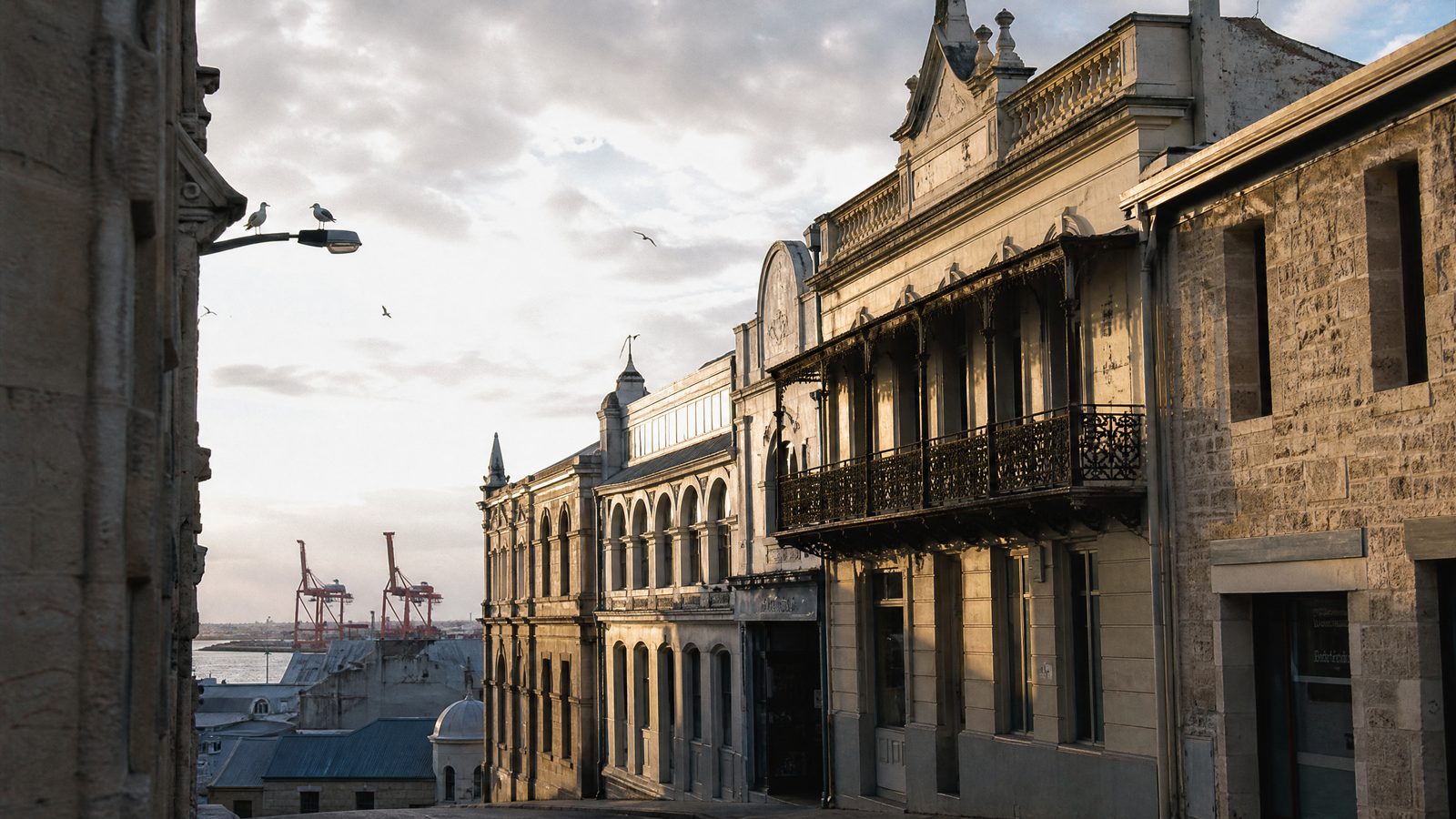
Fremantle sits where the Swan River meets the sea, about 19km south-west of the Perth CBD at the end of its own rail line. It is the state's heritage capital and busiest tourism precinct outside the CBD, anchored by the port, Notre Dame's campus threaded through the West End, the markets and the cappuccino strip. For investors it behaves differently to a dormitory suburb: demand comes from lifestyle migration, education and tourism as much as from commuters. The thesis is irreplaceable heritage fabric plus a civic investment cycle, with the port's long-term future as the state-sized wildcard.
2. Sales and price trends
The Fremantle median house price reads between $1.4 million (CoreLogic data via Your Investment Property, 2026) and $1.6 million (REIWA), with property.com.au at $1.59 million. The spread is real: Fremantle's stock runs from workers' cottages to West End terraces to new waterfront apartments, so the median depends heavily on what sold that quarter. Growth is more consistent across sources: about +16.7% over the past 12 months (Your Investment Property; REIWA shows +14.3%), effectively matching Perth metro's +16.5% to about $920,000 (REIWA figures via Prowest, June 2026).
Units trade around $663,000, up about +14.2% for the year (Your Investment Property; property.com.au reads $757,500 +24.2% on a different mix). With 200 unit sales a year, this is the deepest, most liquid unit market in this report series after Maylands, and the entry price is barely above the Perth unit median.

"Fremantle's median is the least useful number in this series. A limestone cottage in the West End, a renovated terrace near the markets and a new apartment at the marina are three different markets wearing one postcode. When clients ask me 'what's Freo worth', my honest answer is: which Freo? Buy the heritage fabric if you can, that's the asset class the state literally cannot make more of."
3. Rental market and yield
Houses rent for about $905 a week at a gross yield of roughly 3.3% (Your Investment Property; REIWA's blended figure is $925, REIWA). That is one of the better house yields in this series, a function of Fremantle's cottage-heavy stock and its renter share.
Units rent for about $720 a week at a gross yield near 4.6% (Your Investment Property). The tenant pool is unusually diverse: Notre Dame students and staff, port and hospital workers, hospitality staff and lifestyle downsizers. 41.5% of households rent (ABS 2021 Census), and Perth-wide vacancy of about 2.1% (C&CO, June 2026) keeps the market landlord-favoured.
A diverse tenant base: students, port and hospital workers, hospitality staff and downsizers.
4. Supply and demand indicators
Turnover is healthy: about 128 house sales and 200 unit sales in the past 12 months, with houses averaging 13 days on market and units 10 days (Your Investment Property). Population grew 12.7% between the 2016 and 2021 Censuses (Your Investment Property), evidence that apartment conversions and infill are bringing residents back into the city centre.
The supply and renewal picture is dominated by civic projects rather than private towers. The city's strategic plan outlines roughly $1.1 billion of development, including the Kings Square renewal and a target of about 1,500 new dwellings in the city centre alongside 20,000sqm of retail and 70,000sqm of office space (ArchitectureAU, Freo 2029). The state's Fremantle Station Precinct Plan maps renewal around the station and its surrounds (WA Government), and an active planning process is underway for the Victoria Quay waterfront (Fremantle Ports). Heritage controls keep bulk supply constrained in exactly the streets investors most want to own.
"The long game in Fremantle is the port. Every serious plan for moving container operations to Kwinana would free up kilometres of waterfront next to the West End, and you do not get to buy near that twice. I'm not telling clients to bank on it, timelines like that slip by decades. But it's the reason I treat every well-bought Freo heritage property as a keep-forever asset, not a trade."
5. Demographics and affordability
The 2021 Census recorded a population of 9,251 in Fremantle proper (the suburb, not the wider LGA), a median age of 41, and a median household income of $1,822 a week (ABS 2021 Census). Tenure: 28.3% own outright, 27.3% hold a mortgage and 41.5% rent, with just over half of households being families. Incomes are the lowest of the nine suburbs in this series, which reflects the student and hospitality workforce; the flip side is a deep, permanent rental market that does not depend on any single employer.
6. Infrastructure and growth drivers
Fremantle's demand drivers are institutional and hard to disrupt:
- Rail terminus. The Fremantle line ends at a heritage station now subject to its own precinct renewal plan, with the CBD about 30 minutes away (WA Government).
- The port and ferries. A working port economy plus Rottnest ferry traffic keep the waterfront active year-round (Fremantle Ports).
- Notre Dame. The university's campus occupies dozens of West End buildings, embedding thousands of students and staff in the rental catchment (ArchitectureAU).
- Tourism economy. The markets, cappuccino strip, Fishing Boat Harbour and museums drive weekend economies most suburbs never get (ArchitectureAU).
- Civic renewal. Kings Square, the station precinct and Victoria Quay planning represent a sustained public investment cycle in the city's core (see section 4).
7. Risk assessment and strategy fit
- Median ambiguity. A $200K spread between data sources means suburb-level pricing is unusually unreliable; only street and stock-type comparables tell the truth here.
- Heritage costs and approvals. The West End's charm comes with maintenance bills and approval processes; budget both before buying limestone.
- Lower-income tenant base. Hospitality and student tenants are reliable in aggregate but more exposed in downturns than the professional suburbs upriver.
- Civic timelines slip. Kings Square is real, but waterfront and port-transition upside runs on government time; do not pay today for a 2040 story.
- Apartment pockets. New marina and city-centre apartment stock competes on newness; character stock competes on scarcity. Know which game your purchase is playing.
Strategy fit. Fremantle suits a long-hold investor buying heritage character stock (cottages, terraces, West End conversions) as a scarcity asset with a solid 3.3% house yield, or a cash-flow investor buying an established unit into a deep rental pool at a modest entry price. It does not suit investors who need clean suburb-level data to feel safe, or short-horizon buyers banking on civic projects completing on schedule.
8. The investor verdict
Fremantle is the one market in this series where you buy a city, not a street. Growth is tracking Perth, yields are respectable on both stock types, liquidity is real, and more than a billion dollars of civic renewal is in motion around assets, heritage streets, a university, a working waterfront, that cannot be replicated anywhere else in the state. Buy the fabric, verify the specific micro-market with live comparables, and hold it long enough for the port story to become someone else's urgency.
Sources
- Your Investment Property (CoreLogic data), Fremantle 6160
- REIWA, Fremantle suburb profile
- property.com.au, Fremantle 6160
- REIWA Perth market figures, June 2026 (via Prowest)
- C&CO, Perth vacancy and rents, July 2026
- ABS 2021 Census, Fremantle (SAL50522)
- ArchitectureAU, Freo 2029 plan
- WA Government, Fremantle Station Precinct Plan
- Fremantle Ports, Victoria Quay working group report
Thinking about buying in Fremantle?
Numbers like these only get you so far. We can pull live comparable sales, pressure-test a specific property against this data, and negotiate on your behalf in Fremantle.